Queen for a Day(1945)
Overview
Queen for a Day was an American radio and television game show that helped to usher in American listeners' and viewers' fascination with big-prize giveaway shows. Queen for a Day originated on the Mutual Radio Network on April 30, 1945 in New York City before moving to Los Angeles a few months later, and running until 1957. The show then ran on NBC Television from 1956 to 1964. The series is considered a forerunner of modern-day "reality television". The show became popular enough that NBC increased its running time from 30 to 45 minutes to sell more commercials, at a then-premium rate of $4,000 per minute.
Loading episode ratings...
This may take a moment for shows with many seasons.
No imageSeason 1
1 episodes • 1945
Season 1
1 episodes • 1945
| # | Episode | Air Date | Rating |
|---|---|---|---|
| 1 | Episode 1 | Apr 30, 1945 | 0.0 |
Related Shows
Bestie on the Hill
2022Bestie on the Hill features 10 contestants as they fight to be the special guest's new bestie (best friend) in this showdown of wits, charisma and madness.
Famosos a clases
2022No description available.

Spicks and Specks
2005Adam Hills, one of Australia's favourite comedians and winner of Edinburgh's Best of the Fest award, is joined by two team captains, comedian and actor Alan Brough and radio breakfast announcer Myf Warhurst, as well as brave personalities who enjoy having long forgotten embarrassing stories laughed about on national television. Two teams go head to head as they sing, shout and delve deep into the recesses of their collective minds to help earn their team an extremely inglorious victory.

Bullseye
1981Bullseye was a popular British television programme. It was first made for the ITV network by ATV in 1981, then by Central from 1982 until 1995, and was hosted by Jim Bowen.
Tenable
2016Five contestants attempt to answer top 10 list questions for the chance to win a big cash prize.

Who Wants to Be a Millionaire?
1999American version of the tense gameshow where contestants tackle a series of multiple-choice questions to win large cash prizes.
Who Wants to Be a Super Millionaire
2004A spin-off of the American version of "Who Wants to Be a Millionaire?." In this version of the gameshow where contestants tackle a series of multiple-choice question, the dollar prizes are much higher.
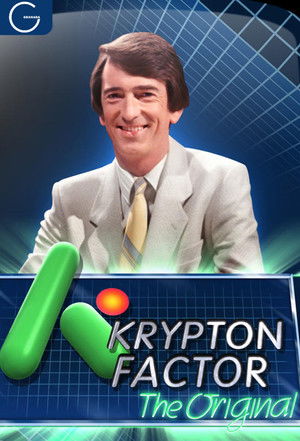
The Krypton Factor
1977The Krypton Factor was a British game show produced by Granada Television for broadcast on ITV. The show originally ran from 7 September 1977 to 20 November 1995, and was hosted by Gordon Burns. Contestants from across the United Kingdom and Ireland competed in a series of rounds that tested their physical stamina and mental attributes. The title of the show is a reference to Superman's home planet Krypton, the title perceiving that the contestants had strong superhuman "powers" for taking part in the challenges they were set.

Whew!
UnknownWhew! is an American game show that aired on CBS from April 23, 1979, until May 30, 1980. It was hosted by Tom Kennedy and announced by Rod Roddy. The game was created by Jay Wolpert. Production was initially credited to the Bud Austin Company, then later changed to Jay Wolpert Productions in association with Burt Sugarman Inc.
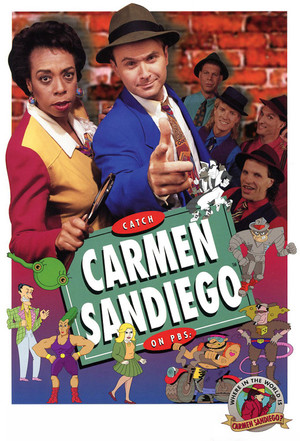
Where in the World Is Carmen Sandiego?
1991A game show based on the Carmen Sandiego computer game series created by Brøderbund Software.
Let's Make a Deal
1963Let's Make a Deal is a television game show which originated in the United States and has since been produced in many countries throughout the world. The show is based around deals offered to members of the audience by the host. The traders usually have to weigh the possibility of an offer being for a valuable prize, or an undesirable item, referred to as a "Zonk". Let's Make a Deal is also known for the various unusual and crazy costumes worn by audience members, who dressed up that way in order to increase their chances of being selected as a trader. The show was hosted for many years by Monty Hall, who co-created and co-produced the show with Stefan Hatos. The current version is hosted by Wayne Brady, with Jonathan Mangum, Tiffany Coyne, and Cat Gray assisting.
Truth or Consequences
1950Truth or Consequences is an American television show originally hosted on NBC radio by Ralph Edwards and later on television by Edwards, Jack Bailey, Bob Barker, Bob Hilton and Larry Anderson. The television show ran on CBS, NBC and also in syndication. The premise of the show was to mix the original quiz element of game shows with wacky stunts. The daily syndicated show was produced by Ralph Edwards Productions, in associated with and distributed by Metromedia Producers Corporation and Lorimar-Telepictures.
Remote Control
1987Remote Control is a TV game show that ran on MTV for five seasons from 1987 until 1990. It was MTV's first original non-musical program. New episodes were made for first-run syndication from 1989 until 1990 which were distributed by Viacom. Three contestants answered trivia questions on movies, music, and television, many of which were presented in skit format. The series was developed by producers Joe Davola and Michael Duggan, and directed by Dana Calderwood.
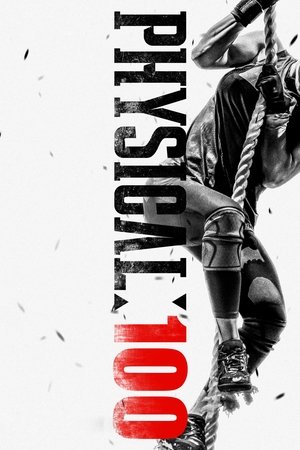
Physical: 100
2023One hundred contestants in top physical shape compete in a series of grueling challenges to claim the honor — and cash reward — as the last one standing.
Concentration
1958Concentration is an American television game show based on the children's memory game of the same name. Matching cards represented prizes that contestants could win. As matching pairs of cards were gradually removed from the board, it would slowly reveal elements of a rebus puzzle that contestants had to solve to win a match. The show was broadcast on and off from 1958 to 1991, presented by various hosts, and has been made in several different versions. The original network daytime series, Concentration, appeared on NBC for 14 years, 7 months, and 3,770 telecasts, the longest run of any game show on that network. This series was hosted by Hugh Downs and later by Bob Clayton, but for a six-month period in 1969, Ed McMahon hosted the series. The series began at 11:30 AM Eastern, then moved to 11:00 and finally to 10:30. Nearly all episodes of the NBC daytime version were produced at 30 Rockefeller Plaza, New York City. A weekly nighttime version appeared in two separate broadcast runs: the first aired from October 30 to November 20, 1958 with Jack Barry as host, while the second ran from April 24 to September 18, 1961 with Downs as host.

Qui peut nous battre ?
2022No description available.

Bad Influence!
1992Bad Influence! is an early to mid-1990s British factual television programme broadcast on CITV between 1992 and 1996, and was produced in Leeds by Yorkshire Television. It looked at video games and computer technology, and was described as a "kid’s Tomorrow's World". It was shown on Thursday afternoons and had a run of four series of between 13 and 15 shows, each of 20 minutes duration. For three of the four series, it had the highest ratings of any CITV programme at the time. Its working title was Deep Techies, a colloquial term derived from 'techies' basically meaning technology-obsessed individuals.
Wheel of Fortune
1988Wheel of Fortune is a British television game show created by Merv Griffin. Contestants compete to solve word puzzles, similar to those used in Hangman, to win cash and prizes. The title refers to the show's giant carnival wheel that contestants spin throughout the course of the game to determine their cash and/or prizes. The programme aired between 19 July 1988 and 21 December 2001 and was produced by Scottish Television for the ITV network and mostly follows the same general format from the original version of the programme from the United States.
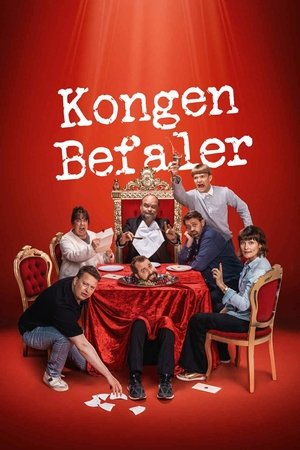
Taskmaster Norway
2019The taskmaster has invited five of Norway's best comedians to solve a number of tasks.
Storybook Squares
1969Storybook Squares is a short-lived Saturday morning version of Hollywood Squares for children. The primary difference, apart from having children as contestants, was that it featured celebrities in costume as well-known fictional characters and some as historical figures. As with the adult version, Peter Marshall was host and Kenny Williams was announcer; Williams read the characters' names off a scroll as "The Guardian of the Gate", a role similar to his "Town Crier" on Video Village. The series originally ran on NBC from January 4 to April 19, 1969, with repeats airing until August 30.